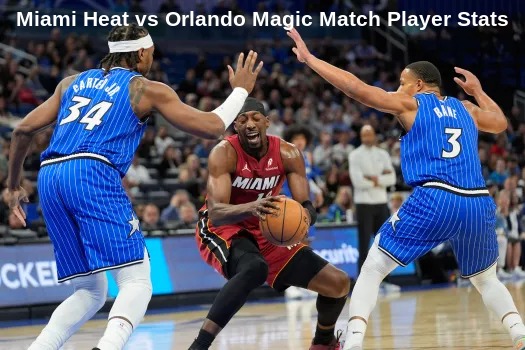

When we talk about Miami Heat vs Orlando Magic Match Player Stats, we are diving deep into more than just points on a scoreboard. This matchup always brings a fascinating contrast in styles, tempo, and individual performances. Whether it’s a regular-season battle or a high-stakes divisional clash, the numbers behind the game reveal the real story.
The rivalry between the Miami Heat and the Orlando Magic may not always grab national headlines, but from a basketball purist’s perspective, it’s a tactical chess match. One side leans on discipline, defensive identity, and structure. The other thrives on youthful energy, length, and explosive scoring bursts.
In this detailed breakdown of Miami Heat vs Orlando Magic Match Player Stats, we’ll analyze individual performances, team metrics, advanced numbers, and what those stats truly mean beyond the box score.
First Half Player Stats: Setting the Tone Early
The first half often defines the rhythm of this matchup, and that was certainly the case here. Miami opened the game with sharp ball movement and efficient shot selection. Their primary scorers attacked early mismatches, forcing Orlando to adjust defensively. The Heat’s shooting percentages in the first two quarters were strong, particularly from mid-range and beyond the arc.
On the Orlando side, their young core responded with aggression in transition. Fast-break points became a major factor. The Magic pushed the tempo, capitalizing on defensive rebounds and turnovers. Their ability to convert in early offense situations kept the scoreline tight and prevented Miami from building a comfortable cushion.
Looking at the Miami Heat vs Orlando Magic Match Player Stats from the first half, the standout categories were field goal efficiency and rebounds. Miami slightly edged out Orlando in shooting percentage, but Orlando dominated second-chance points thanks to offensive rebounding. That battle in the paint would become a defining theme throughout the game.
Star Performers: Leading from the Front
Every Heat performance starts with the leadership and scoring ability of Jimmy Butler. In this matchup, Butler showcased his typical all-around game. He wasn’t just scoring; he was facilitating, defending multiple positions, and drawing fouls. His free-throw attempts reflected his aggressive mentality, and his assist numbers highlighted his playmaking instincts.
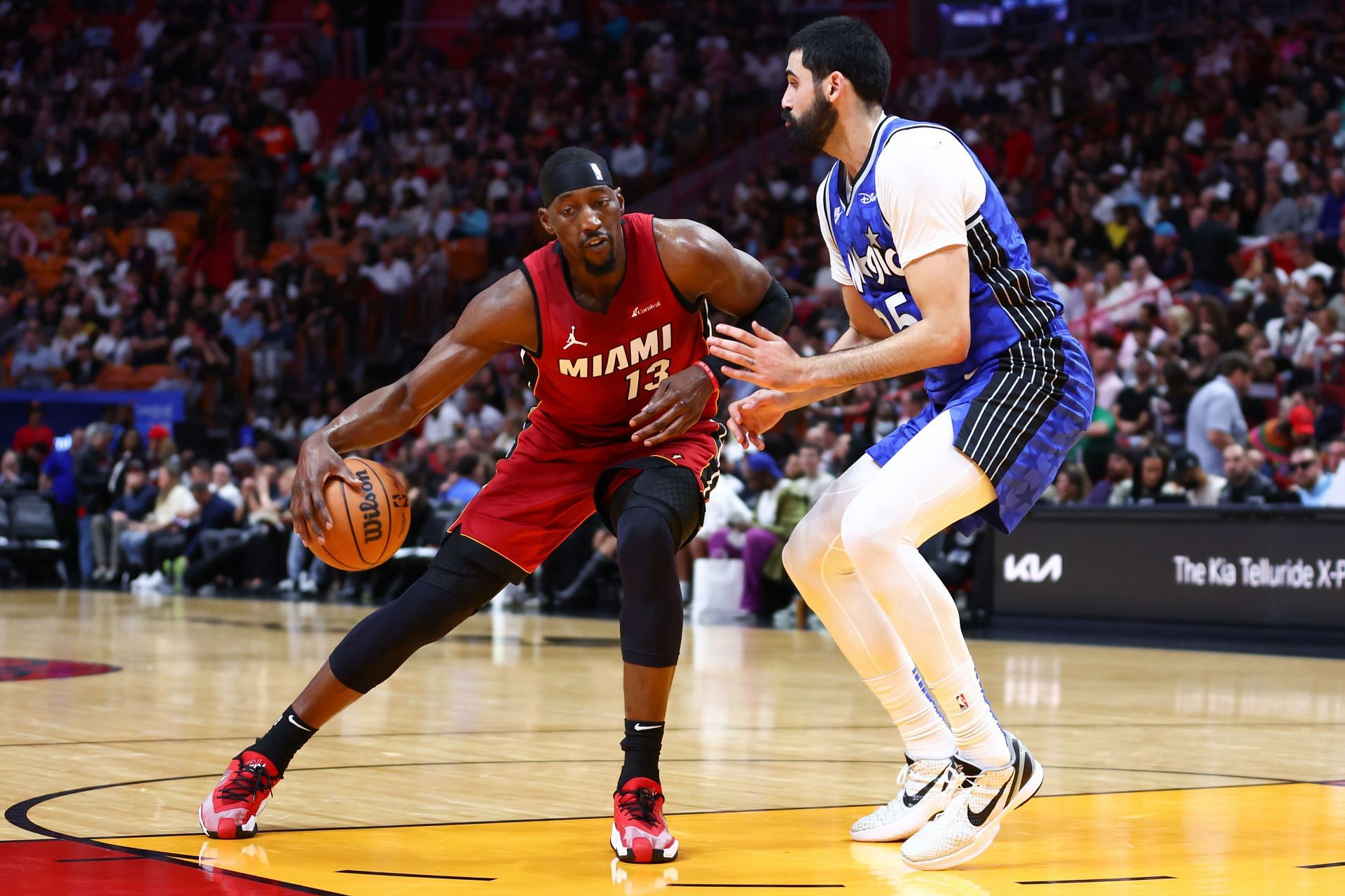
Inside the paint, Bam Adebayo delivered a strong two-way performance. His stat line was balanced: points in double figures, solid rebounding numbers, and multiple defensive stops. Beyond the raw numbers, his ability to switch onto guards and protect the rim disrupted Orlando’s offensive rhythm.
For the Magic, the offensive engine was Paolo Banchero. He attacked off the dribble, finished through contact, and consistently got to the line. His stat sheet reflected high usage but also efficiency. Banchero’s scoring output kept Orlando competitive, particularly during scoring droughts.
Another key contributor was Franz Wagner, who provided perimeter scoring and secondary playmaking. His three-point shooting stretched Miami’s defense and opened driving lanes. In the Miami Heat vs Orlando Magic Match Player Stats, Wagner’s plus-minus rating stood out as a reflection of his impact during critical stretches.
Bench Production: The Hidden Difference
When analyzing Miami Heat vs Orlando Magic Match Player Stats, bench performance often reveals the game’s turning point. Miami’s second unit played with composure. Their reserves maintained defensive intensity and avoided costly turnovers. Even if their scoring totals were modest, their efficiency and ball control prevented Orlando from capitalizing during rotation shifts.
Orlando’s bench, however, showed flashes of explosiveness. Quick scoring bursts and aggressive drives kept the pressure on Miami. The Magic reserves contributed valuable three-point shooting, helping close small gaps when the starters rested.
That said, consistency was the separator. Miami’s bench players posted fewer turnovers and better assist-to-turnover ratios. In close matchups like this, small statistical edges off the bench can be decisive, and that’s exactly what the Miami Heat vs Orlando Magic Match Player Stats indicated.
Defensive Metrics and Hustle Numbers
Defense rarely dominates highlight reels, but in this matchup, it played a major role. Miami forced multiple shot-clock violations and contested nearly every perimeter attempt. Their defensive rating in this game reflected discipline and communication.
Orlando countered with active hands and shot-blocking. The Magic recorded several blocks and steals, turning defense into quick transition points. Their length disrupted passing lanes, especially in the third quarter.
Looking deeper into Miami Heat vs Orlando Magic Match Player Stats, hustle numbers like deflections, contested shots, and loose-ball recoveries told the real story. Miami excelled in defensive rotations, while Orlando excelled in rim protection. Both teams showed effort, but Miami’s structured defensive schemes gave them a slight statistical edge.
Third Quarter Momentum Shift
The third quarter is often where games swing, and this one was no different. Miami came out of halftime with adjusted spacing and increased ball movement. Their assist numbers spiked during this stretch, reflecting improved offensive flow.
Orlando initially struggled with shot selection in the third. Forced jumpers and rushed possessions led to a temporary scoring drought. However, once they re-established inside-out ball movement, their shooting efficiency improved.
The Miami Heat vs Orlando Magic Match Player Stats from the third quarter clearly showed Miami’s dominance in that frame. A higher field goal percentage, fewer turnovers, and stronger rebounding numbers allowed them to build a manageable lead heading into the final period.
Clutch Time Execution and Closing Stats
In the fourth quarter, execution became everything. Miami slowed the pace and relied on half-court sets. Butler’s isolation scoring and Adebayo’s interior presence proved reliable when possessions mattered most.
Orlando, meanwhile, leaned heavily on Banchero’s shot creation. While he delivered key buckets, Miami’s defensive adjustments limited clean looks in the final minutes. The Magic’s three-point attempts increased late, but efficiency dipped under pressure.
Examining Miami Heat vs Orlando Magic Match Player Stats in clutch time, free-throw percentage and turnover margin were decisive. Miami converted crucial free throws and protected the ball. Orlando’s late-game turnovers hurt their comeback chances and ultimately shaped the final result.
Advanced Stats Breakdown
Raw stats tell part of the story, but advanced metrics offer deeper insights. Miami posted a stronger effective field goal percentage, reflecting smarter shot selection. Their offensive rating in half-court sets outperformed Orlando’s transition-heavy attack.
Orlando’s rebound percentage, particularly on the offensive glass, stood out positively. They created extra possessions, which kept the scoreboard close. However, their turnover percentage was slightly higher, negating some of those second-chance opportunities.
Player efficiency ratings also highlighted Miami’s balanced attack. Rather than relying solely on one star, multiple players posted solid efficiency numbers. Orlando had standout individual efficiency from Banchero and Wagner, but depth consistency favored Miami in this statistical comparison.
What the Stats Really Mean Going Forward
When reviewing Miami Heat vs Orlando Magic Match Player Stats, it becomes clear that experience and execution were key differentiators. Miami’s composure in tight moments translated directly into statistical advantages in turnover control and free-throw efficiency.
For Orlando, the numbers show growth and promise. Their young core continues to produce impressive stat lines, especially in scoring and rebounding. However, small inefficiencies in late-game decision-making remain areas for development.
Ultimately, this matchup demonstrated how numbers reflect identity. Miami’s stats mirror discipline and structure. Orlando’s stats showcase athleticism and offensive upside. As the season progresses, these statistical trends will likely define how both teams position themselves within the conference standings.
Final Thoughts on Miami Heat vs Orlando Magic Match Player Stats
The beauty of analyzing Miami Heat vs Orlando Magic Match Player Stats is that every number carries context. Points matter, but so do contested shots, defensive switches, and timely assists. This game was a perfect example of how basketball is both an art and a science.
Miami’s edge came from execution, experience, and situational awareness. Orlando’s performance showed resilience, scoring talent, and competitive fire. The stats confirmed what seasoned observers could see: this was a tightly contested battle shaped by details.
For fans and analysts alike, breaking down Miami Heat vs Orlando Magic Match Player Stats offers more than a recap—it provides a blueprint of strengths, weaknesses, and future potential. And if this game is any indication, the next meeting between these two teams will be just as statistically compelling.