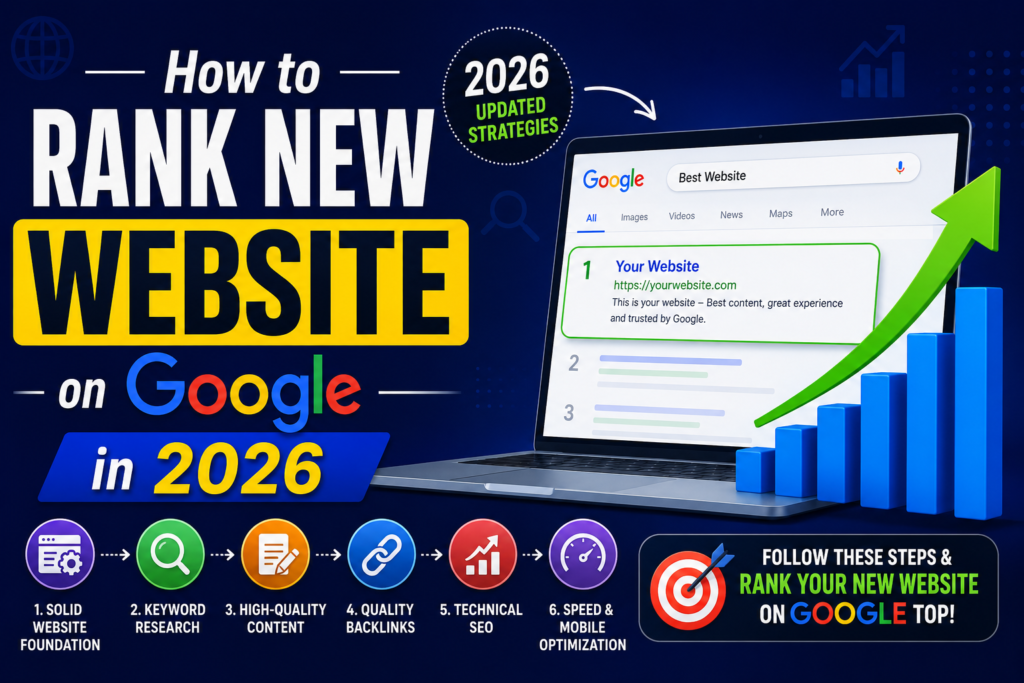

How to Rank New Website on Google 2026 Launching a new website is an exciting venture, but it can also be challenging, especially when it comes to getting noticed on Google. In 2026, the landscape of search engine optimization (SEO) continues to evolve, and understanding how to rank your new website effectively is essential for driving traffic and achieving online success. This guide will walk you through the key steps to optimize your site and improve its visibility in search engine results.
Understand SEO Basics
What is SEO?
Search Engine Optimization (SEO) is the practice of optimizing your website to improve its visibility on search engines like Google. The main goal of SEO is to attract organic traffic, which refers to visitors who find your site through unpaid search results. In 2026, SEO remains a critical aspect of digital marketing, and grasping its fundamentals is vital for any new website owner.
Importance of Keywords
Keywords are the specific terms and phrases that potential visitors enter into search engines when searching for information. Conducting keyword research is crucial for understanding what your target audience is looking for. By identifying relevant keywords, you can create content that aligns with their interests and needs. Tools like Google Keyword Planner, Ubersuggest, and Ahrefs can help you discover valuable keywords to target in your content strategy.
On-Page vs. Off-Page SEO
SEO can be divided into two main categories: on-page and off-page SEO. On-page SEO refers to the optimizations you make directly on your website, such as content quality, meta tags, and internal linking. Off-page SEO, on the other hand, involves actions taken outside your website, such as building backlinks and social media engagement. Both on-page and off-page SEO are essential for improving your website’s ranking on Google, and a balanced approach that incorporates both will yield the best results.
Create High-Quality Content
Crafting Valuable, Engaging Content
Content is king when it comes to SEO. In 2026, Google prioritizes high-quality, relevant content that provides value to users. When creating content for your How to Rank New Website on Google 2026 focus on topics that interest your target audience. Aim to write in a casual yet informative tone that makes your content relatable and engaging. Consider using a mix of content formats, such as blog posts, videos, infographics, and podcasts, to cater to different preferences.
Optimize for User Intent
Understanding user intent is crucial for creating content that ranks well on Google. User intent refers to the underlying reasons for a search query—whether users are looking for information, seeking to make a purchase, or wanting assistance with a problem. By optimizing your content to address specific user intents, you can enhance engagement and increase the likelihood of conversions. For instance, if users are searching for “best smartphones,” your content should provide detailed reviews and comparisons to meet their needs.
Regularly Update Existing Content
Once your website is live, don’t forget about your existing content. Regularly updating and refreshing your articles can keep them relevant and improve their chances of ranking higher. Google favors fresh content, so revisit older posts to enhance them with updated statistics, insights, or new perspectives. This practice not only helps with SEO but also demonstrates your commitment to providing valuable information to your audience.
Optimize Your Website Structure
Ensure User-Friendly Navigation
A well-structured website is essential for both user experience and SEO. Ensure that your website has a clear and logical navigation system, making it easy for visitors to find the information they seek. Use descriptive labels for menu items and include a search bar to help users locate specific content quickly. A user-friendly layout not only enhances the visitor experience but also reduces bounce rates, which can positively impact your search rankings.
Focus on Mobile Optimization
With the increasing use of mobile devices, optimizing your website for mobile is crucial. Google employs mobile-first indexing, meaning it primarily uses the mobile version of your site for ranking purposes. To ensure your website is mobile-friendly, implement a responsive design that adapts to various screen sizes. Use Google’s Mobile-Friendly Test tool to identify and resolve any issues that may affect the mobile user experience.
Improve Page Load Speed
Page speed is a critical factor in determining your website’s ranking on Google. If your site takes too long to load, users are likely to leave, leading to higher bounce rates. To improve page load speed, optimize images, minimize HTTP requests, and leverage browser caching. Tools like Google PageSpeed Insights can help you analyze your website’s performance and provide recommendations for improvement.
Build Quality Backlinks
Understanding the Role of Backlinks
Backlinks are links from other websites that point to your site. They serve as endorsements, signaling to Google that your content is valuable and trustworthy. In 2026, building quality backlinks remains a vital strategy for improving your search engine ranking. The more high-quality backlinks you have, the more authoritative your website will appear to search engines.
Strategies for Acquiring Backlinks
There are several effective strategies for acquiring backlinks. One popular method is guest blogging, where you write articles for other websites in your niche. In exchange for your content, you can include a link back to your site, helping to drive traffic and improve your authority. Additionally, consider creating shareable content, such as infographics or in-depth guides, that others may want to reference and link to.
Monitor Your Backlink Profile
Regularly monitor your backlink profile using tools like Ahrefs or Moz. This will help you identify which sites are linking to you and ensure that your backlinks come from reputable sources. If you find any low-quality or spammy links, consider using the disavow tool to prevent them from negatively impacting your SEO efforts. A healthy backlink profile can significantly boost your site’s credibility and improve its ranking on Google.
Leverage Social Media
Utilize Social Media Platforms
Social media plays a significant role in promoting your new website and driving traffic. While social signals do not directly influence search rankings, they can enhance your online visibility and engagement, leading to more backlinks and visitors. Share your content across various social media platforms to reach a broader audience and encourage sharing.
Engage with Your Audience
Building a community around your brand is essential for long-term success. Engage with your audience by responding to comments, asking for feedback, and encouraging discussions. This interaction fosters a sense of loyalty and motivates users to share your content with their networks, amplifying your reach.
Run Targeted Social Media Campaigns
Consider running targeted social media campaigns to promote your content and attract new visitors. This could include contests, giveaways, or collaborations with influencers in your niche. By increasing your reach and engagement on social media, you can drive more traffic to your website and improve your overall online presence.
FAQ
1. How long does it take to rank a new website on Google?
The time it takes to rank a new website on Google can vary widely, typically ranging from a few weeks to several months. Factors such as competition in your niche, the quality of your content, and your SEO efforts all play a role in how quickly your site can gain traction.
2. Do I need to invest in paid SEO tools?
While free SEO tools can be effective, investing in paid tools can provide more comprehensive features and insights. If you’re serious about SEO and want to enhance your strategy, consider using paid tools for keyword research, backlink analysis, and site audits.
3. Is it necessary to be active on social media for SEO?
While social media activity does not directly affect SEO rankings, it can significantly impact your overall online visibility and traffic. Engaging with your audience on social media can lead to more shares and backlinks, indirectly benefiting your SEO efforts.
4. What is the role of local SEO?
If your website targets a local audience, optimizing for local SEO is essential. This includes creating a Google My Business profile, utilizing local keywords, and gathering customer reviews. Local SEO helps you rank higher in local search results, driving relevant traffic to your site.
5. Can I do SEO on my own, or do I need to hire an expert?
Many website owners successfully implement SEO strategies on their own, especially with the wealth of resources available online. However, if you’re unfamiliar with SEO or lack the time to dedicate to it, hiring an expert can be beneficial. An SEO professional can provide tailored strategies and save you time in the long run.
Conclusion
Ranking a new website on Google in 2026 requires a strategic approach that encompasses understanding SEO fundamentals, creating high-quality content, optimizing your site structure, building backlinks, and leveraging social media. While the process may take time and effort, following these guidelines will help you increase your website’s visibility and attract organic traffic. Stay patient, continue learning about SEO trends, and refine your strategies to achieve lasting success in the digital landscape.