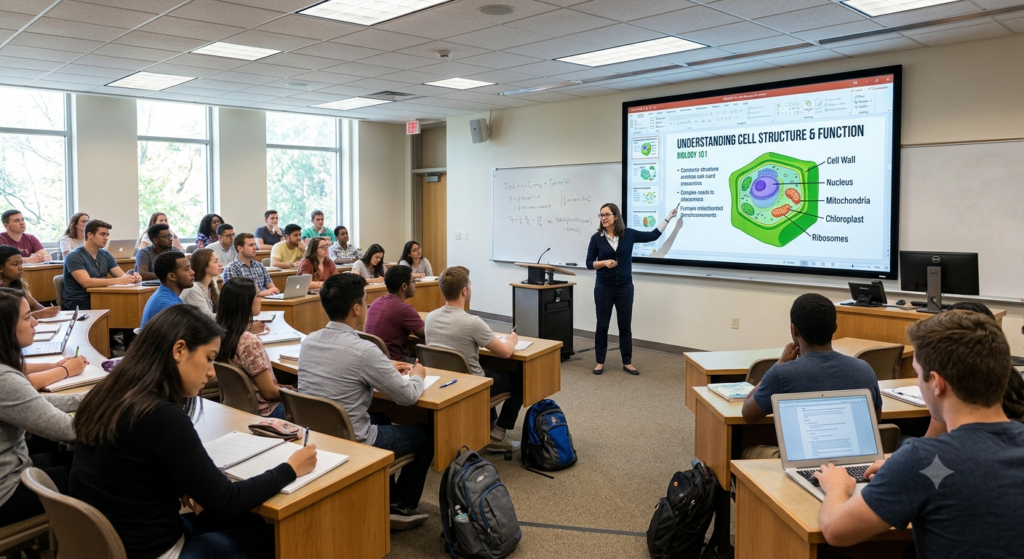

Every educator knows the chaotic energy of a Classroom Screen transition. You are trying to pull up a YouTube video, two students are asking what they should be doing, and another group is completely off-task because the physical whiteboard instructions are blocked by a projector screen. Managing a modern classroom requires a delicate balance of time management, visual structure, and student engagement.
Introducing a digital classroom screen into your daily workflow completely changes this dynamic. Instead of juggling five open browser tabs and a slide deck, a web-based classroom screen consolidates your essential teaching resources onto a single interactive canvas. It acts as an intuitive central control center, allowing you to instantly project timers, noise monitors, text instructions, and random name pickers. This intentional blending of educational technology and practical classroom management keeps your students on task without you ever having to raise your voice.
For schools shifting toward dynamic, student-centered environments, a classroom screen is no longer a luxury—it is an indispensable everyday utility. By organizing your entire day onto a highly structured layout, you can automate your morning routines, seamlessly guide small group work, and establish predictable operational pacing. Let’s dive deep into how a digital classroom screen optimizes instructional delivery and explore the specific features that make it a favorite for millions of primary, high school, and special education teachers globally.
High-Impact Features of an Interactive Classroom Screen
The core value of a professional classroom screen lies in its versatile ecosystem of interactive widgets. Rather than relying on static presentation tools that freeze your display, a dynamic classroom screen lets you overlay functional applications directly onto your primary whiteboard surface. For instance, you can type active instructions inside a clean text block while concurrently running an animated countdown timer right beside it. This spatial proximity ensures students always see both what they are supposed to do and how much time they have left to finish.
Advanced systems offer advanced tools like an integrated annotation bar that allows you to freely sketch, highlight, and doodle over any digital element. Educators can leverage customizable colors, custom HEX palettes, and precision brush adjustments to draw focal arrows or outline student contributions in real time. This active layer of visual scaffolding is incredibly valuable for special education and language instruction, as it translates spoken instructions into clear, concrete graphic landmarks.
Beyond basic time-keeping and annotation, a feature-rich classroom screen includes powerful utility options like built-in randomizers and automatic group makers. If you want to encourage balanced participation, the random name selector draws from pre-saved student rosters to choose individuals fairly without bias. When it is time to transition into collaborative workshops, the group generator automatically divides your roster into balanced clusters, eliminating the social anxiety and logistical delays that traditionally plague student group formation.
+——————————————————————-+
| CLASSROOM SCREEN |
+—————————————————+—————+
| | |
| [Text Box: Group Work Instructions] | [Timer] |
| 1. Read pages 45-50 quietly. | 12:45 |
| 2. Highlight three key historical arguments. | |
| 3. Discuss findings with your elbow partner. | |
| |—————+
| | [Visual Cue] |
| [Annotation Layer: Underline Key Verbs] | (Work) |
| | (Symbols) |
+—————————————————+—————+
| [Widget Menu: Name Picker | Traffic Light | Poll | Media | QR] |
+——————————————————————-+
Strategic Classroom Management and Smoother Daily Transitions
Effective classroom management is inherently tied to predictable pacing and structural transparency. When students walk into a room and instantly see a dedicated morning admission screen displaying the calendar, date, and a specific “do now” agenda, they quickly adjust to a working mindset. A classroom screen helps you design these predictable environmental boundaries, minimizing unstructured downtime where off-task behaviors typically spike.
[ MORNING ARRIVAL ]
│
▼
[ DIRECT INSTRUCTION ] ──( Use Annotation & Media Widgets )
│
▼
[ WORKSTATION ROTATION ] ──( Run Split Timers & Group Lists )
│
▼
[ EXIT POLL / WRAP-UP ]
Managing classroom volume during self-directed work or collaborative stations is another massive challenge that a digital classroom screen elegantly solves. By utilizing an automated traffic light or a live noise monitor widget, you can communicate noise level limits completely silently. A simple shift from green to yellow provides an instant, universal reminder that the room volume is creeping too high, empowering your students to self-regulate their noise levels independently.
Furthermore, a classroom screen serves as an exceptional structural foundation for differentiated learning and station-based frameworks. Teachers can easily prepare multiple distinct layout screens in advance—often organized into structured screen decks—and toggle between them as classes rotate. Whether you are running individual reading blocks, timed math intervals, or structured brain breaks, having distinct, pre-configured screen arrangements allows your transitions to execute flawlessly with a single click.
Boosting Active Engagement with Real-Time Interactive Data
A major pitfall of traditional presentations is that students quickly slip into passive consumption. A digital classroom screen combats this passivity by integrating instant feedback loops right into your core display area. By embedding live response polls or quick formative assessment questions directly onto your active board, you can instantly measure class comprehension before moving forward with a lesson sequence.
Step 1: Project Live Poll Question on Classroom Screen
│
▼
Step 2: Students scan QR Code on board via personal devices
│
▼
Step 3: Real-time bar charts update instantly on the main screen
This integrated approach makes collecting formative data incredibly frictionless. Students simply scan an auto-generated QR code displayed on the screen with their individual tablets or phones to cast their votes secretly. The aggregated, real-time feedback updates instantly on the main layout, allowing you to quickly spot common misconceptions and adapt your teaching strategy on the fly without waiting for a graded quiz.
These interactive engagement strategies work brilliantly for both in-person classrooms and hybrid digital formats. In local physical settings, seeing their choices visually shift the graphs on the display draws students directly into the lesson conversation. For remote learners, sharing the live classroom screen over your video call ensures everyone accesses the exact same randomizers, visual prompts, and tracking timers, creating a beautifully cohesive community learning space.
Choosing the Ideal Classroom Screen Hardware and Software Split
Finding the right balance between hardware investments and your everyday classroom screen software depends entirely on your instructional environment. On the physical equipment front, schools often invest in massive interactive flat panels, dedicated document cameras, and smart blackboards that feature cloud sync and fast NFC user logins. These durable hardware solutions offer crisp visual clarity, wide viewing angles, and multi-touch capabilities that stand up perfectly to daily use.
On the software side, lightweight browser utilities offer unparalleled speed and agility. Free platforms like Classroomscreen.com require zero complex installations and can be opened on any hardware device—be it a projector, Chromebook, or interactive display—within seconds. This accessibility means teachers can easily save custom widget arrangements, build unlimited student rosters, and pin their favorite screen layouts to their dashboard for immediate access.
| Feature Metric | Hardware Tools (Interactive Panels) | Software Platforms (Web Apps) |
| Primary Advantage | High-precision touch, low eye strain, long durability | Immediate startup, cloud saving, no-prep setups |
| Annotation Depth | AI handwriting conversion, direct physical stylus | Custom HEX codes, multi-color brushes, opacity bars |
| Data Interaction | Multi-device mirroring, local network sharing | Remote QR code polls, live browser widgets |
| Setup Friction | Requires installation, hardwiring, driver updates | Opens in any standard browser instantly |
Ultimately, the most successful implementations merge these two worlds. Projecting a versatile, cloud-based classroom screen web application onto a large interactive display panel gives you the absolute best of both experiences. You unlock a robust suite of educational widgets backed by responsive, high-performance touch hardware, keeping your digital learning space incredibly organized, focused, and fun.
Frequently Asked Questions (FAQ)
What is a digital classroom screen and how does it assist teachers?
A classroom screen is a specialized digital canvas that consolidates essential classroom management tools—such as timers, text instructions, random name pickers, and noise monitors—into a single web view. It assists teachers by replacing multiple chaotic browser tabs, automating daily transitions, and providing clear, scannable visual cues that keep students organized and on task.
Can I save my custom classroom screen layouts to reuse them tomorrow?
Yes, most premium and professional tiers allow educators to save customized screen arrangements, organize screens into dedicated folders, and build screen decks for different subjects. Basic free tiers typically give you instant access to all core widgets, but upgraded memberships let you save customized backgrounds and unlimited student rosters for effortless reuse.
Does a classroom screen work effectively for hybrid or remote learning?
Absolutely. Because these screens are web-accessible, a teacher can easily share their active browser screen over any video conferencing platform. Remote students can view the running timers, track daily instructions, and participate in interactive live polls via QR codes or links exactly like they would if they were sitting directly in a physical room.
How do the random name picker and group maker widgets encourage fairness?
These widgets remove human bias from Classroom Screen participation by selecting students completely at random from your pre-loaded rosters. The automatic group maker divides your class list into balanced clusters instantly on screen, which saves valuable instruction time and completely eliminates the social stress and anxiety students feel when picking teams manually.
What are the new feature updates for classroom screen tools in 2026?
Recent software enhancements have introduced advanced customization capabilities, including the ability to build personalized color palettes using HEX codes or digital eyedropper tools for custom annotations. Teachers can also pin their most-used screen decks to the top of their dashboard and upload custom images or animated GIFs directly into their timetable schedules.