
Portland Trail Blazers vs Denver Nuggets Match Player Stats
Portland Trail Blazers vs Denver Nuggets Match Player Stats When you talk about Western Conference battles that consistently deliver intensity, skill, and drama, the Portland Trail Blazers vs Denver Nuggets match player stats always tell a compelling story. This isn’t just another regular-season matchup; it’s a clash of styles, philosophies, and star power. Every time the Portland Trail Blazers step onto the court against the Denver Nuggets, the numbers reveal far more than just who scored the most points.
In this detailed breakdown of Portland Trail Blazers vs Denver Nuggets match player stats, we’ll go beyond surface-level box scores. We’ll analyze scoring efficiency, rebounding battles, playmaking impact, defensive metrics, and bench contributions. The goal is simple: understand how individual performances shape the outcome of this high-level Western Conference rivalry.
If you’re looking for a deep dive into Portland Trail Blazers vs Denver Nuggets match player stats with expert-level insight written in a casual yet informed tone, you’re in the right place.
Star Power Showdown: Elite Performers and Their Impact
Every Portland Trail Blazers vs Denver Nuggets match player stats sheet starts with the stars. On Denver’s side, it typically revolves around the brilliance of Nikola Jokić. His stat lines often read like something out of a video game—25+ points, double-digit rebounds, and near double-digit assists. What makes Jokić unique is not just the raw numbers, but the efficiency. He shoots at a high percentage from the field, controls the pace, and orchestrates the offense like a point guard in a center’s body.
When you analyze Portland Trail Blazers vs Denver Nuggets match player stats, Jokić’s assist-to-turnover ratio often stands out. He doesn’t just rack up assists; he makes precise reads that break down Portland’s defensive schemes. His ability to hit cutters, shooters, and roll men forces the Blazers to collapse, which opens up the perimeter.
On the Portland side, depending on the roster phase, the focus has been on dynamic guards and developing stars. High-usage players typically dominate the Portland Trail Blazers vs Denver Nuggets match player stats with scoring bursts, especially from beyond the arc. However, the key difference often lies in efficiency. While Portland may have a high-volume scorer putting up 30 points, the shooting percentage and defensive impact often determine whether those numbers translate into a win.
Scoring Breakdown: Efficiency vs Volume
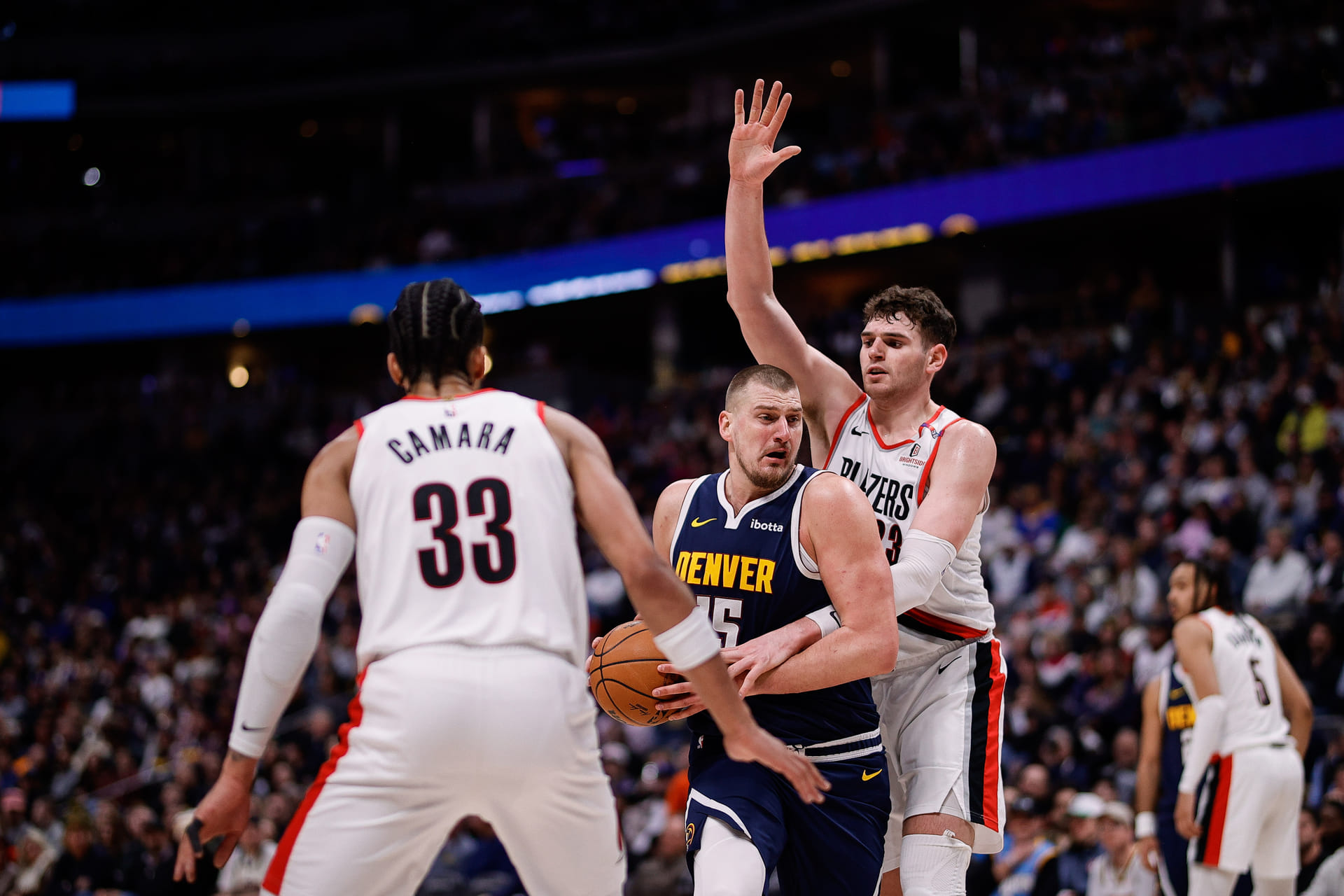
One of the most revealing aspects of Portland Trail Blazers vs Denver Nuggets match player stats is how the points are generated. Denver thrives on ball movement, spacing, and high-percentage shots. When you look at their field goal percentage, it is often several points higher than Portland’s. That difference might seem small, but over four quarters, it adds up significantly.
The Nuggets tend to dominate points in the paint. Thanks to Jokić’s post presence and cutting wings, Denver frequently records 50+ paint points in these matchups. When analyzing Portland Trail Blazers vs Denver Nuggets match player stats, you’ll often see Denver with a clear edge in inside scoring. That interior dominance forces Portland to adjust defensively, sometimes leading to foul trouble for their big men.
Portland, on the other hand, often relies heavily on perimeter shooting. Three-point attempts usually spike in these games. In Portland Trail Blazers vs Denver Nuggets match player stats, you may notice the Blazers taking 35–45 shots from beyond the arc. When they are hot, they can outscore Denver quickly. But when those shots do not fall, the efficiency gap becomes glaring, and Denver capitalizes with transition opportunities.
Rebounding and Physicality: The Hidden Battle
Rebounding numbers in Portland Trail Blazers vs Denver Nuggets match player stats are often the silent indicator of who controlled the game. Denver typically holds an advantage on the defensive glass. Jokić’s positioning, combined with strong wing rebounding, limits Portland’s second-chance opportunities.
Offensive rebounds are particularly telling. When the Nuggets secure double-digit offensive boards, their chances of winning increase dramatically. Extra possessions translate into momentum shifts and easy put-back points. In many Portland Trail Blazers vs Denver Nuggets match player stats reports, second-chance points become a decisive category.
For Portland, rebounding success usually depends on collective effort. Guards crashing the boards and bigs boxing out aggressively can neutralize Denver’s size. If the Blazers manage to keep the rebounding margin close, the overall stat sheet tends to look far more balanced. But when they get outrebounded by 10 or more, the scoreboard typically reflects it.
Playmaking and Ball Movement: Assists Tell the Story
Another critical area in Portland Trail Blazers vs Denver Nuggets match player stats is assists. Denver consistently ranks among the league leaders in assists per game, and that trend shows up clearly in this matchup. The Nuggets often record 28–32 assists in well-played games against Portland.
The key here is unselfish basketball. Denver’s offense flows through Jokić, but multiple players usually finish in double figures. Balanced scoring lines are common. When reviewing Portland Trail Blazers vs Denver Nuggets match player stats, you’ll notice Denver often has five or six players scoring at least 10 points.
Portland’s assist numbers can fluctuate more dramatically. In games where ball movement stagnates and isolation scoring dominates, their assist totals dip into the low 20s or even teens. When that happens, the offense becomes predictable. However, when Portland matches Denver’s ball movement and gets 25+ assists, the stat sheet reflects a far more competitive contest.
Defensive Metrics: Blocks, Steals, and Efficiency
Defense does not always make headlines, but Portland Trail Blazers vs Denver Nuggets match player stats often highlight key defensive plays that shift momentum. Denver’s defensive rating in these matchups is usually solid, anchored by strong team rotations and positional awareness.
Steals and deflections often reveal which team dictated tempo. If Portland generates double-digit steals, they can convert those into fast-break points. However, Denver’s disciplined offense typically limits live-ball turnovers. In many Portland Trail Blazers vs Denver Nuggets match player stats summaries, you’ll notice Denver keeping turnovers under 12—a crucial factor in maintaining control.
Blocks are another area to watch. While Denver is not always a high-block team, timely rim protection plays can halt Portland’s scoring runs. Conversely, when Portland’s bigs step up with multiple blocks, it energizes the team and crowd. Defensive numbers may seem secondary, but they often separate close wins from narrow losses.
Bench Production: The X-Factor
Bench contributions frequently swing the outcome in Portland Trail Blazers vs Denver Nuggets match player stats. Denver’s second unit often brings consistent scoring and defensive energy. When their bench outscores Portland’s by 10 or more points, the Nuggets usually maintain comfortable leads.
Portland’s bench performance can be streaky. In some matchups, a role player catches fire and changes the game’s complexion. In others, limited scoring from reserves puts pressure on starters to carry heavy minutes. When examining Portland Trail Blazers vs Denver Nuggets match player stats, always check the bench scoring differential—it is often the hidden X-factor.
Depth matters over 48 minutes. Denver’s ability to stagger lineups and keep at least one playmaker on the floor prevents scoring droughts. Portland, when developing younger talent, sometimes struggles with second-unit efficiency. That gap shows clearly in advanced plus-minus numbers within the match stats.
Turnovers and Game Management
Turnovers are one of the most underrated elements in Portland Trail Blazers vs Denver Nuggets match player stats. Denver typically plays with composure, limiting careless mistakes. Their turnover numbers are often in the low teens, which keeps their offensive rating high.
Portland, especially during high-pressure stretches, can experience turnover spikes. Live-ball turnovers are particularly damaging because they lead to fast-break opportunities. When analyzing Portland Trail Blazers vs Denver Nuggets match player stats, you will often find a direct correlation between Portland’s turnover count and the final score margin.
Game management also includes free-throw efficiency. Denver’s stars usually shoot at a high percentage from the line, closing games effectively. If Portland struggles at the stripe in tight contests, those missed points show up glaringly in the final stat breakdown.
Final Thoughts: What the Numbers Really Reveal
At the end of the day, Portland Trail Blazers vs Denver Nuggets match player stats are more than just numbers on a page. They reveal style contrasts—Denver’s efficiency and ball movement versus Portland’s perimeter firepower and scoring bursts. They highlight how rebounding, assists, turnovers, and bench production collectively shape outcomes.
The consistent theme across Portland Trail Blazers vs Denver Nuggets match player stats is efficiency. Denver often wins the efficiency battle: higher field goal percentage, fewer turnovers, better rebounding margins, and balanced scoring. Portland’s path to victory typically involves hot three-point shooting, strong defensive pressure, and keeping the rebounding battle close.
For fans and analysts alike, diving into Portland Trail Blazers vs Denver Nuggets match player stats offers a deeper appreciation of how elite NBA teams operate. It is not just about who scores the most points—it is about how those points are generated, supported, and protected over four quarters of high-level basketball.
YOU MAY ALSO READ
Miami Heat vs Orlando Magic Match Player Stats
Chicago Cubs vs Milwaukee Brewers Match Player Stats
About the Author